Online Technical Training Blog
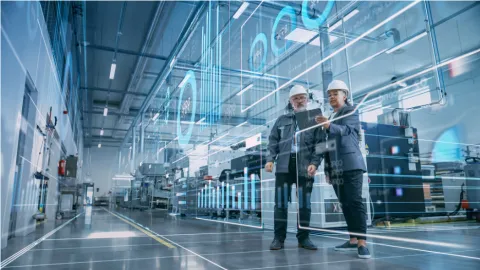
AI in Manufacturing: What It Can’t Replace and Why Technicians Still Matter




AI has been widely adopted in automation and robotics, which has led to some common concerns about AI replacing human jobs. What's less understood is the importance of skilled technicians in modern manufacturing operations, and the role these technicians play in the day-to-day functioning of modern industries. With good training, technicians work alongside AI-driven machines and robots, helping to facilitate their functioning in various settings.
Key Takeaways:
- AI supports skilled workers by improving productivity and safety, but it does not replace human expertise.
-
Skilled technicians install, set up, calibrate, diagnose, and repair AI-driven systems.
-
Human oversight is a requirement to run factory and industrial technologies.
-
Technician training helps workers develop the digital skills needed to run these facilities.
-
Soft skills such as communication and teamwork are also important; these skills can't be replaced by AI.
What Is AI in Manufacturing?
AI is used in industrial settings to support accuracy and efficiency in the production of modern goods and services. There are many ways that AI is used in modern manufacturing, including:
-
Digital twin technology: Digital twins are complex models that simulate the manufacturing process, helping with process design and troubleshooting.
-
Machine learning: Machine learning helps perfect the production process by eliminating inefficiencies and enabling growth at the production line.
- Augmented reality (AR) and virtual reality (VR): AR and VR technologies enable problem-solving on the jobsite by displaying data in immersive new ways.
AI is an essential part of Industry 4.0, a term that refers to the set of digital technologies that make smart manufacturing possible. Today, Industry 4.0 has caused revolutionary changes in industrial facilities.
How AI Is Changing Manufacturing Operations
AI has automated production line monitoring. With smart sensors and the Industrial Internet of Things, AI systems assist with quality inspection, defect detection, inventory, supply chain optimization, and more.
AI-supported machines also help with various repetitive, rule-based processes through pattern recognition, workflow optimization, and automated scheduling. AI systems provide real-time equipment monitoring, perform large-scale data analysis and problem-solving, and provide predictive modeling to drive production improvement.
Why AI Cannot Fully Replace Skilled Technicians
Behind the AI that drives smart manufacturing are the skilled technicians who understand these complex systems. AI has various abilities to support modern manufacturing, but it has limitations. It is unpredictable in real-world situations. Every facility relies on human judgment and decision-making to diagnose various equipment failures, troubleshoot repairs, and oversee AI for reliability and safety.
Skilled technicians play a critical role in tasks such as:
- Installing and maintaining equipment
-
Calibrating and troubleshooting various systems
-
Monitoring system performance
-
Performing preventive maintenance
- Supporting operational efficiency
Skilled technicians do this in collaboration with various engineers and automation specialists. They use teamwork, experience, and human ingenuity to do their jobs.
Human Skills That AI Cannot Replicate
Humans have critical thinking and problem-solving skills that make modern manufacturing possible.
-
Contextual awareness: AI can process information, but humans understand the full context of a situation and can make judgment calls based on experience.
-
Communication and teamwork: Humans can work in teams to complete their tasks and solve problems with efficiency.
-
Adaptability during emergencies: People have leadership and decision-making skills that allow them to adapt to emergency and shutdown situations.
-
Ethical judgment: People understand the importance of ethics and accountability in the workplace. This strengthens their judgment and helps keep workplaces safe.
AI and Robotics Require Human Oversight
AI and robotics need people for programming and configuration, monitoring, and updating. Without these functions, the machines that power modern industrial facilities would gradually lose their ability to do their job. They would develop faults and break down.
Automation and Digital Skills
Programmable logic controllers (PLCs) are the industrial computers that control various machines. Modern industrial facilities need skilled technicians who understand PLCs. Technicians use their mechanical knowledge and digital troubleshooting skills to keep these computers functioning.
Predictive Maintenance
AI has various sensors and condition-monitoring technologies to determine when predictive maintenance is required. It is the responsibility of the technician to interpret maintenance alerts. When needed, technicians perform inspections, repairs, and component replacements. This helps reduce downtime and keep the system functioning as a whole.
Safety Responsibilities
Humans inspect equipment for damage and wear, then verify safe system operation after repairs. They use various safety protocols and maintain compliance with workplace safety regulations to make this happen.
Online Technician Training Supports Modern Manufacturing Careers
Online technician training prepares people for careers in automation, robotics, and industrial systems. Through simulations and carefully developed courses, students learn how to excel in smart factory environments. For those who are already working in industrial and manufacturing settings, online technician training supports continuous learning and can help workers transition from one role to another.
Career Opportunities for Technicians in AI-Driven Manufacturing
There are many career opportunities for technicians in AI-driven manufacturing, including electronics technicians, automation technicians, and robotics technicians.
Manufacturing careers will continue to see growth in automation, with increasing collaboration between humans and machines. The rising demand for technicians with skills to work in AI-assisted roles means there are many opportunities for those who want to work in advanced manufacturing.
Start Your Career Through Online Technician Training
George Brown Polytechnic's self-paced training with an affordable, pay-as-you-go tuition structure makes it possible to start your career as an industrial technician. We invite you to explore our online technician programs, call our expert Program Consultants toll-free at 1-888-553-5333, or email us at [email protected].